
Editor’s Note: This post was updated on November 10, 2026, for accuracy and comprehensiveness. It was originally published on June 13, 2023.
Push-ups, squats, lunges, tricep dips, and planks are among the best strength exercises to do at home. Together, these bodyweight exercises target most major muscle groups and require little or no equipment. This article covers how to perform each exercise, common variations, and tips for strength training at home.
Strength training is commonly used to build muscle and power. While the term “strength training” may bring to mind images of “pumping iron” at a gym, it does not require extensive equipment or a gym membership, and many effective exercises can be done at home.
Benefits of Strength Training at Home
Strength training, otherwise known as resistance training, is a form of exercise that helps you build muscle. When you introduce resistance to your workout (in the form of weights or your own body weight), your muscles become stressed and damaged. With the right nutrition and recovery timing, your body then rebuilds those muscle fibers, leading to bigger and stronger muscles over time. In addition to muscle growth, strength training also has a variety of other perks that can further your health and wellness goals. For example, strength training has been found to be associated with a range of health benefits, including:
Higher self-esteem and better movement control
Improvements in visceral fat, blood sugar levels, and insulin sensitivity
Better heart health from improved blood pressure and cholesterol levels
Stronger, denser bones
Relief from aging-associated pain, such as back pain
Sharper cognitive functioning, especially in older adults
Strength training is an important part of overall health, and it does not require extensive equipment. Simple at-home exercise programs can help build muscle and improve strength. At-home workouts may be particularly helpful for older adults, since they are generally easier to follow and present fewer risks. They are also often more convenient than regular visits to a gym or fitness studio.
The 5 Best Strength Exercises to Do at Home
All of these exercises can be done at home with minimal space and equipment. However, you can incorporate equipment you happen to have on hand into these workouts, such as dumbbells or resistance bands. In addition, you can attempt more difficult variations of these exercises if you’d like to make them more challenging.
Push-Ups

The traditional push-up is a great exercise for people of all fitness levels. It engages muscles throughout your entire body, especially your shoulders, arms, and chest. The push-up is challenging but fairly beginner-friendly.
Benefits:
Works major muscle groups in your upper body as well as your core
No equipment required
Several variations can increase the difficulty once you master the basic push-up
How to perform:
Start in a high plank position with your hands directly below your shoulders. Keep your back straight with no arching.
Slowly lower yourself toward the ground. Make sure to keep your elbows close to your body and to keep them moving backward rather than out to the side.
Push back up to the starting position, keeping your back flat and your core engaged.
Repeat. Try doing two or three sets of 10 repetitions to start.
Variations:
Narrow push-ups: Bring your hands together directly below your chest to further challenge your triceps, chest, and shoulders.
Incline push-ups: Brace yourself against a slightly elevated surface (think a couch or a chair) rather than the floor, which is great for targeting your chest and core.
Burpees: To perform this high-intensity move that increases your calorie burn, drop into a regular push-up, then immediately jump up and repeat it.
Squats

The squat is a great exercise that uses muscles throughout your entire body. It’s a popular weighted strength training exercise, but it’s also effective even with minimal equipment.
Benefits:
A full-body compound movement
Especially good for targeting your legs and glute muscles
No equipment needed, but you can easily add weights to make it more challenging
How to perform:
Stand with your feet slightly apart, aligned with your hips, and facing forward.
Slowly “sit back” until your thighs are parallel to the floor.
Using your glute muscles, return to the starting position.
Repeat. Try doing five sets of 15 repetitions.
Variations:
Dumbbell squats: Lift two dumbbells up to your shoulders, then do your squats. This will increase the resistance. You can also perform squats with other weights, such as barbells or kettlebells.
Bulgarian split squats: This is a challenging single-leg movement that primarily targets the quadriceps and glutes. Stand a step or two in front of an elevated surface, such as a chair, and rest the top of one foot on the surface behind you. Lower by bending the front knee, then return to standing.
Pause squats: Pause at the bottom of your squat for five seconds to force more muscle engagement, then resume the set.
Plié squats: Target your inner thigh muscles by standing in a wider stance, with your feet pointing out. Squat, making sure your knees follow the direction of your feet.
Lunges

Similar to the squat, the lunge is an excellent full-body workout that is particularly effective for your large lower-body muscles. It also works each leg individually, challenges balance and core strength, and raises heart rate.
Benefits:
Great for working your legs and glutes, and also enhancing your balance
Excellent low-impact exercise for beginners
How to perform:
Stand straight with your feet shoulder-width apart.
Step one foot forward.
Slowly drop the other knee until it almost touches the ground. Keep the front shin vertical and the knee from extending forward past the toes.
Push back up to a standing position, then repeat on the other leg to complete one rep.
Do three sets of 10 lunges on each leg.
Variations:
Dumbbell lunges: Hold a heavy dumbbell in each hand to increase resistance.
Walking lunges: This is a great variation for targeting your functional fitness. Instead of returning to the starting position, step the back foot forward into the next lunge.
Tricep Dips

Tricep dips target the muscles on the back of your arms. They’re a simple movement with a big payoff, and they can be done at home using nothing more than a sturdy elevated surface, such as a chair or couch.
Benefits:
Uses your own body weight to target your triceps, chest, and shoulders
Very easy to do at home with just your furniture
How to perform:
Sit on the edge of a sturdy couch, table, or chair. Place your hands on the edge of the seat on either side of your body.
Walk your legs forward until your body leaves the seat but your hands remain in contact with it.
Slowly lower your body toward the ground, using your arms as a brace.
Then, push up with your triceps to return to your starting position.
Repeat, doing three sets of 10 repetitions.
Variations:
Weighted dips: Place a weight plate on your lap to increase resistance during the movement.
Planks

Finally, holding a plank is a deceptively simple but excellent workout for your entire body. It especially targets your core muscles, as they have to work hard to keep you stable and in place during this challenging hold.
Benefits:
Increases core stability and balance
Zero equipment needed
How to perform:
Start by lying face-down on the ground.
Move so that your forearms are braced on the ground, with your elbows just below your shoulders. Your hands can either be clasped together or on the ground.
Push yourself up so that you are balanced on the balls of your feet and your forearms.
Hold this position for at least 30 seconds, keeping your back straight. Avoid arching your back, which can strain the lower back.
Release, rest, then repeat. As strength improves, the hold can be gradually extended to one minute, repeated up to five times.
Variations:
Weighted plank: To increase resistance, have someone carefully lay a weighted plate onto your back.
Bird dog: From a hands-and-knees position, extend the opposite arm and leg straight out to further challenge your core and sense of balance.
Important Tips for Strength Training at Home
Focus on Intensity
If you’re brand-new to strength training, these exercises will probably be fairly demanding, but you’ll likely notice that they get easier over time. If you find that you aren’t needing to push yourself as hard anymore, it’s a good sign that it’s time to increase the difficulty by adding more repetitions, sets, or weights.
Make the Most of Your Time
Strength training does not necessarily require long sessions. Some research suggests that the most time-efficient way to approach strength training is to perform at least four weekly sets per muscle group using a load that allows about 6–15 repetitions, or 15–40 repetitions when sets are performed to failure. The same research suggests that advanced techniques can roughly halve training time while maintaining training volume. Advanced techniques include:
Drop sets: Start your workout with a heavy weight for several repetitions, then immediately drop the weight and continue the exercise until you can’t do another repetition.
Supersets: Perform one exercise for a certain number of repetitions, then immediately move into another exercise.
Rest-pause training: Perform repetitions at a high weight until failure, rest for no more than a minute, then repeat for multiple sets.
Consistency Is Key
Strength gains develop over time with regular training. Research in older adults found that four or more weekly sessions of 30 minutes or longer were more effective at improving muscle strength than shorter or less frequent training.
Add Other Exercises to Your Routine as Well
Other types of exercise can complement at-home strength training, including:
Running, walking, and other kinds of steady-state cardio: Cardio is good for your heart health and can also increase your calorie burn if you’re trying to lose body fat.
Yoga and/or Pilates: Great for core strength, stability, posture, and mobility, yoga and Pilates are ideal complements to strength training.
Plyometrics: Also referred to as “jump training,” the explosive movements used in plyometrics can increase calorie burn and build power. Examples include burpees, high jumps, and pop squats.
How to Know Your Home Workouts Are Working
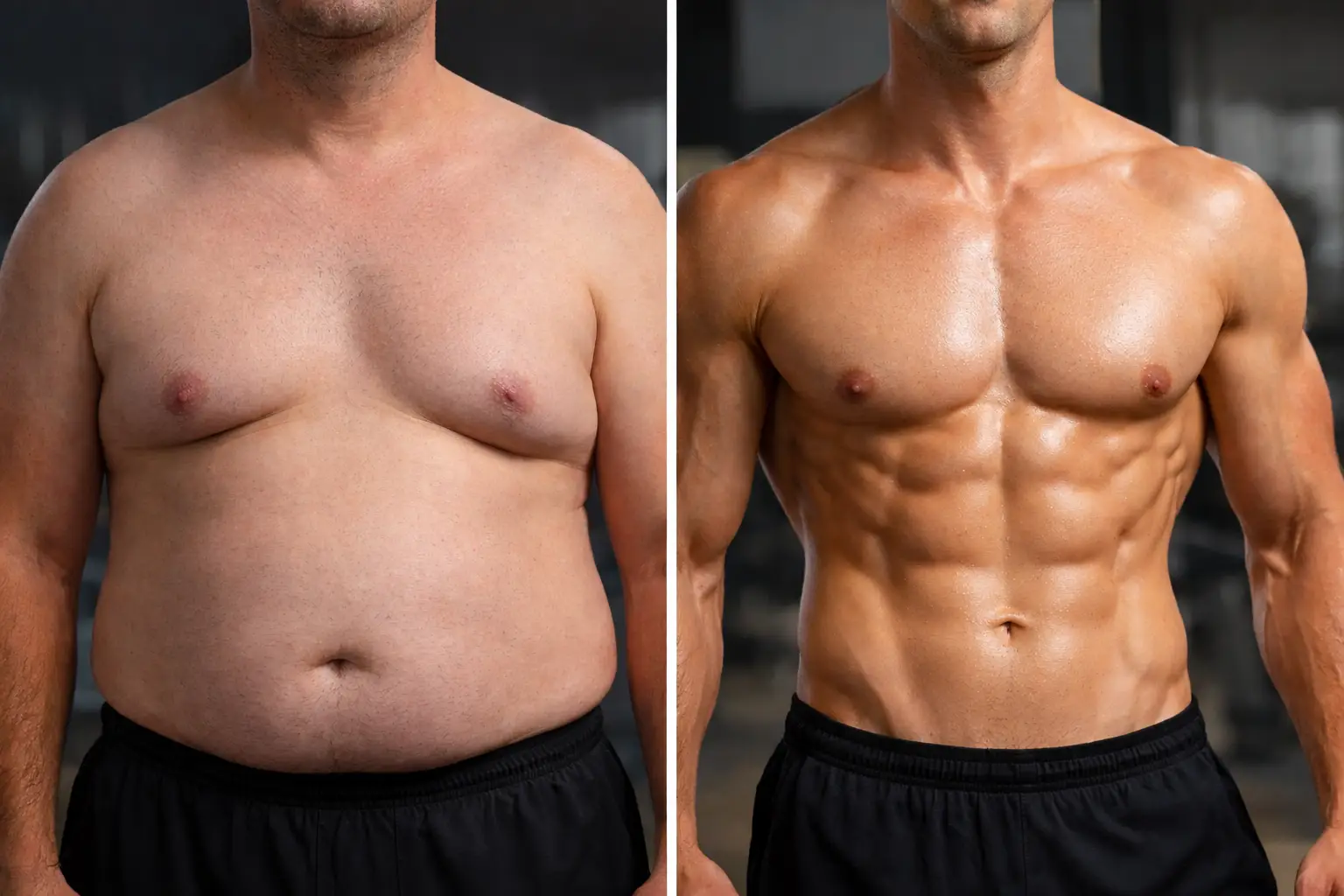
Body weight alone may not reflect changes from strength training, since gaining muscle while losing fat can result in little change on the scale. Body composition analysis measures components such as lean body mass and body fat, which can show changes in muscle that the scale does not. Tracking body composition over time can help indicate whether training is associated with gains in lean mass.
Conclusion
An effective strength-training workout can start in the comfort of your own living room or home gym. Gradually increasing repetitions, sets, or weight over time helps keep muscles challenged at any fitness level. Periodic body composition testing can also help show whether training is leading to changes in muscle mass.
Frequently Asked Questions
What Are the Best Exercises for Strength at Home?
Some of the best exercises for strength at home include push-ups, squats, lunges, tricep dips, and planks. These exercises work multiple muscle groups, require little or no equipment, and can be made more challenging with variations.
Can You Build Strength Without Weights?
Yes. Bodyweight exercises can build strength, particularly for beginners, because muscles respond to resistance whether it comes from weights or body weight. Adding repetitions, sets, or more challenging variations over time can support continued progress.
How Often Should You Do Strength Exercises at Home?
Training frequency varies by individual. Research in older adults found that four or more weekly sessions of 30 minutes or longer were more effective for improving muscle strength than shorter or less frequent training. Other research suggests that total weekly training volume may matter more than frequency.
How Do You Know if Home Workouts Are Building Muscle?
Body composition analysis can show changes in lean body mass over time that the scale or mirror may not reflect. An increase in lean mass may indicate that training is building muscle, even if total body weight changes little.